On this page
Key facts
- Rated load (Japan)
- 350 kg (about 770 lb) of cargo; occupants counted separately
- Japanese gross weight formula
- Curb weight + rated load + 55 kg per seat
- Bed size, 1999-on trucks
- 1,940 x 1,410 mm (76 x 55 in) with 290 mm sides
- Water weight
- 1 kg per liter, about 8.3 lb per US gallon
- US camper labeling
- 49 CFR 575.103 requires a weight label on slide-in campers
- Rear view rule example
- Arizona requires two mirrors when a load blocks the rear view
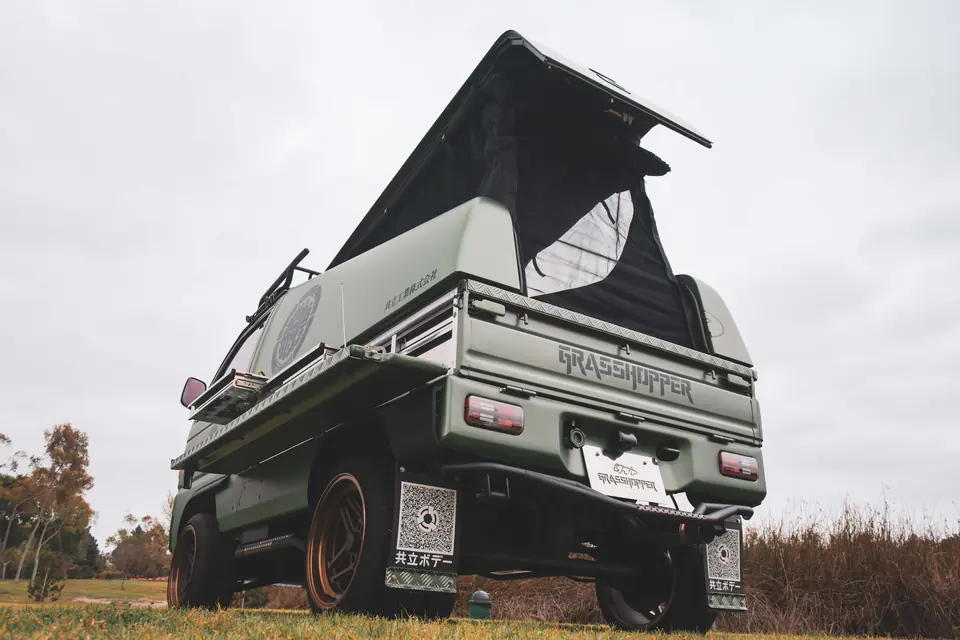
A Kei Truck camper is a small living space that rides in the bed: a fiberglass shell, a plywood cabin or a pop-top unit. Built light, it makes a cheap, easy-to-park base for hunting trips, festivals and back-road travel. Built heavy, it overloads a truck rated for 350 kg of cargo.
Can a Kei Truck carry a camper?
Yes, if the camper and everything in it stays within the truck's 350 kg (about 770 lb) rated load. In Japan, a truck's gross vehicle weight is its curb weight plus the rated load plus 55 kg for each seat, so the 350 kg covers cargo only and the two occupants are counted separately. Even so, that leaves little room, and a camper has to be light by design.
The bed on 1999-and-later trucks measures about 1,940 by 1,410 mm (76 by 55 inches) with 290 mm (11.4 inch) sides, so most shells and cabins are sized to that footprint. Measure a pre-1999 truck before you buy anything, because its bed is narrower. Full dimensions by model are on the Kei Truck specs page. If you want weatherproof walls and a roof from the start, a Kei Van may suit you better.
How heavy can a Kei Truck camper be?
The camper, water, gear and supplies together must stay under 350 kg (about 770 lb), so a practical shell or cabin weighs far less than that. Here is an illustrative budget, not a measured build:
| Item | Example weight |
|---|---|
| Shell or cabin, dry | 140 kg (309 lb) |
| Water, 40 liters | 40 kg (88 lb) |
| House battery and wiring | 20 kg (44 lb) |
| Bedding, clothes and personal gear | 45 kg (99 lb) |
| Food, cooler and cooking kit | 35 kg (77 lb) |
| Tools, recovery gear and spares | 25 kg (55 lb) |
| Total | 305 kg (672 lb) |
That leaves a 45 kg (99 lb) margin. Water is the item people underestimate: a liter weighs a kilogram, and a US gallon weighs about 8.3 lb. Ask any shell builder for the dry weight in writing; in the US, makers of slide-in campers must put a weight label on each unit (49 CFR 575.103). Then weigh the loaded truck on a certified public scale and compare the result with the curb weight on your paperwork plus 350 kg, plus 55 kg (121 lb) for each person aboard.
Will a camper make a Kei Truck tip over?
It can if the weight sits high, because these trucks are narrow: Honda lists a track of 1,295 mm front and 1,310 mm rear (about 51 inches) on the 2007 Acty, and a tall camper raises the center of gravity well above the cab floor.
- Keep heavy items low and forward, near the cab, with water and batteries on the floor.
- Balance the load from side to side.
- Choose a low-profile or pop-top design over a tall box if you drive in wind.
- Slow down for corners, ramps and crosswinds, and leave more room to stop.
US rules show what matters here. Slide-in camper makers must show the location of the camper's center of gravity, and truck makers must publish the zone where it should sit (49 CFR 575.103). Kei Trucks never came with that US information, so keeping the weight centered between the axles is your job.
How do you tie down a camper on a Kei Truck?
Anchor the camper to the frame or to brackets built for the purpose, not to the rope hooks along the bed sides, which are meant for tying down cargo with rope. Turnbuckles at each corner, attached to frame-mounted brackets, are the usual approach for a slide-in shell. A cabin that bolts through the bed floor needs large backing plates under the thin steel.
Retighten everything after the first few miles and at each fuel stop on the first trip, because new mounts settle. The bed sides fold down, so secure or remove them as the camper's design requires, and make sure the gate latches can't rattle loose.
How do you power and ventilate a Kei Truck camper?
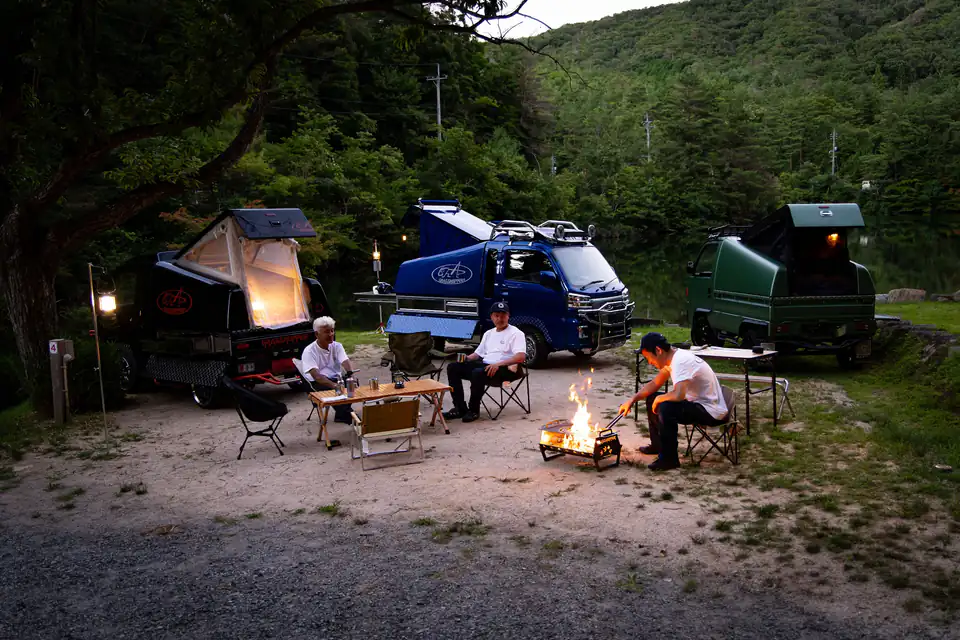
Keep the house battery separate from the starting battery and charge it through an isolator or a DC-to-DC charger, because a Kei Truck alternator has little spare output. Roof solar panels top up the house battery without loading the engine. Before a long trip, have the alternator and belts checked and replace a weak starting battery.
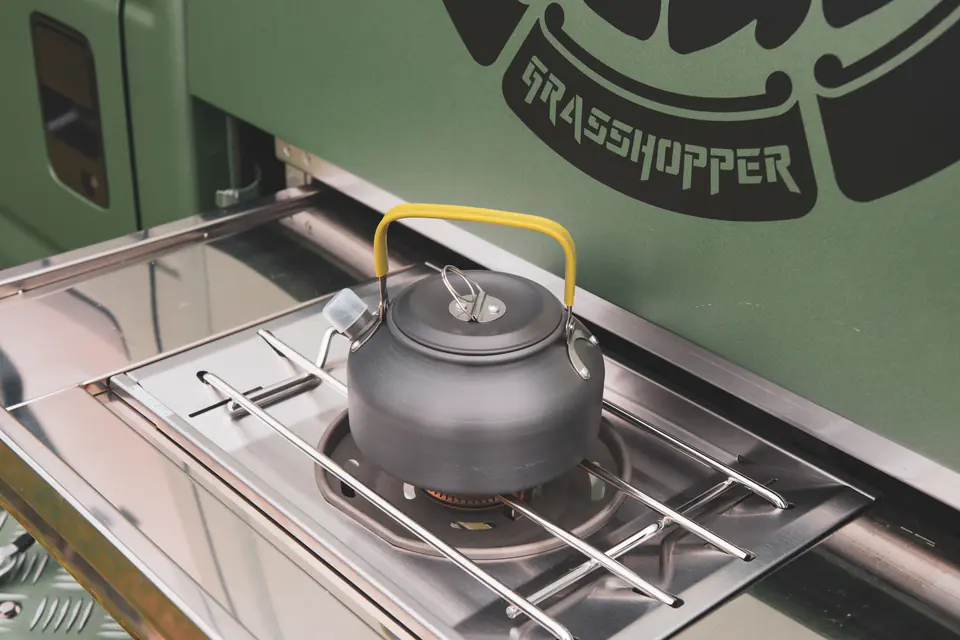
Ventilation matters more than insulation in a space this small. Fit a roof vent and an opening window for cross-flow, and treat the camper as indoors. The Centers for Disease Control and Prevention (CDC) says never to use a portable gas camp stove indoors and to fit battery-powered carbon monoxide detectors near sleeping areas (CDC). Cook outside, never run the engine for heat while you sleep, and keep a fire extinguisher by the door.
Carbon monoxide has no smell. A small, closed camper can reach dangerous levels quickly, so a working detector is not optional.
Is a Kei Truck camper street legal?
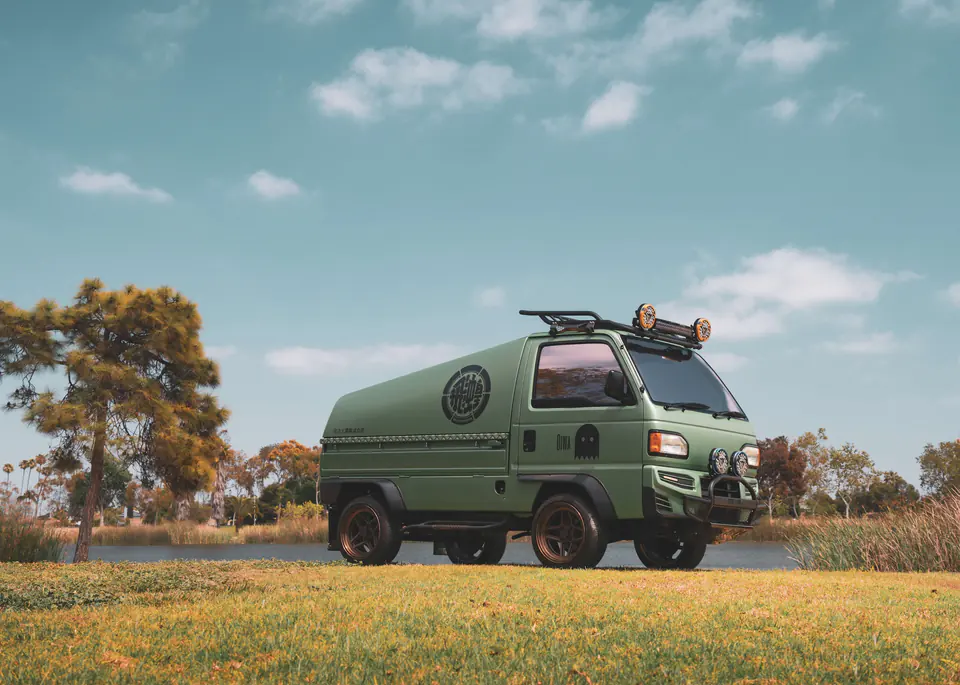
A camper doesn't change whether the truck itself may be driven on public roads, so start with your state's rules on the Kei Truck laws hub. Ask your DMV whether your state titles or registers a slide-in camper separately or treats it as part of the load. Then check the details:
- Mirrors. If the camper blocks your view to the rear, Arizona, for example, requires two mirrors that show at least 200 feet behind the truck (A.R.S. 28-956). Wider Kei Truck mirrors help here.
- Lights and plate. Tail lights, brake lights, turn signals and the license plate must stay visible. Add lights to the camper if it hides the truck's own.
- Size definitions. Some states define a Kei Truck by its dimensions. North Carolina caps a mini-truck at 78 inches tall and 60 inches wide (G.S. 20-4.01), so ask whether a camper counts toward those numbers before you build tall or wide.
- Overhang. If anything extends past the tailgate, check your state's flag or light rule for projecting loads.
Should you build a Kei Truck camper or buy one?
Build one if you want control over weight and cost; buy one if you want a finished unit and can confirm its weight. A light plywood or aluminum-frame cabin with foam insulation and simple fittings can stay well inside the budget above, and you know what every part weighs because you weighed it. If you add a rack or other hardware, the Kei Truck mods guide covers what each adds.
Finished shells and cabins are sold in the US by small builders, and Japan has a long tradition of Kei campers on trucks and vans. Ask for the dry weight in writing, look closely at how the unit mounts, and check the roof seams and windows for leaks. A Japan-built camper still imports under the 25-year rule based on the base truck's build month, and customs may treat a truck carrying a camper body differently from a plain truck, so ask a licensed customs broker before you buy. The import guide covers the rest of the process.
Frequently asked questions
How much can a Kei Truck camper weigh?
Everything in the bed, camper included, should stay within the truck's 350 kg (about 770 lb) rated load. Once you count water, a house battery, bedding, food and tools, a practical shell or cabin usually needs to weigh well under 200 kg (441 lb) as a rough guide. Get the dry weight in writing and weigh the loaded truck on a public scale.
Does a Kei Truck camper need its own registration?
It depends on your state. Ask your DMV whether it titles or registers slide-in camper units separately or treats them as part of the truck's load. Either way, the truck itself must be legal for road use where you live, and the camper must not hide the truck's lights, turn signals or license plate.
Is a Kei Van better than a Kei Truck for camping?
For many people, yes. A Kei Van gives you walls, a roof and lockable doors from the factory, which saves weight and build time, and you sleep inside a body built for people or cargo. A truck with a removable camper keeps an open bed for work the rest of the year, so choose by how often the camper comes off.
Can you run a heater in a Kei Truck camper overnight?
Only a heater designed for vented use in small campers, installed to its maker's instructions, with a working battery-powered carbon monoxide detector near your bed. Never use a portable gas camp stove inside for heat, and never idle the truck's engine for warmth while you sleep, because exhaust can seep into the cabin.
Will heavier springs let a Kei Truck carry a bigger camper?
No. Stiffer or helper springs can reduce sag, but they don't change the truck's 350 kg rated load, its brakes, its tires or its axles. Worn shocks and tired springs are worth replacing on any loaded truck, but plan the camper around the rating rather than around the suspension.