On this page
Key facts
- Typical bolt-on lift
- About 1.5-2 in
- Factory tire (1999 Carry, 2007 Acty)
- 145R12 6PR LT
- Stock width
- About 55 in before 1999, about 58 in from 1999
- Rated load (Japan)
- 350 kg (about 770 lb), including anything you bolt on
- Bumper height example
- Idaho: 24 in front, 26 in rear for trucks rated 4,500 lb GVWR or less
- Driving lamp example
- Arizona: no more than two, mounted 16-42 in high
The right Kei Truck mods make the truck safer, more comfortable and better at its job. The wrong ones fight its light chassis, its small charging system or your state's vehicle rules. Here is what is worth doing, in a sensible order, with the legal checks that go with each step.
What should you do before you modify a Kei Truck?
Service the truck and register it in stock form first, because a fresh timing belt and fluids matter more than any upgrade and a stock truck is the easiest one to title. The Kei Truck maintenance guide lists the arrival service. Then check your state's rules on two points:
- Inspection. States that inspect check lights, mirrors, tires, brakes and other equipment, and a heavily modified truck invites questions.
- Vehicle definitions. Some states define a Kei Truck by its size. North Carolina's mini-truck definition, for example, caps width at 60 inches and height at 78 inches (G.S. 20-4.01), so wide flares or a tall rack can matter on paper.
If your state plates Kei Trucks only under an antique, collector or farm class, read that class's rules as well, since some expect the vehicle to stay close to factory form. The Kei Truck laws hub links every state's rules.
How much can you lift a Kei Truck?
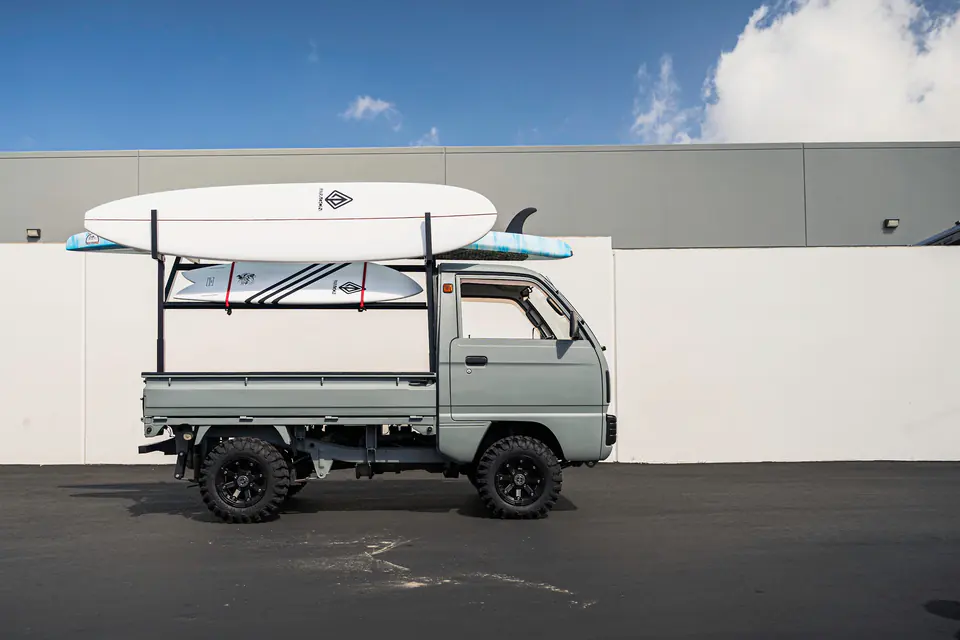
Most bolt-on Kei Truck lift kits raise the truck about 1.5-2 inches, and that is the sensible range for a work truck. Kits differ by model: some raise the body off the frame with spacers, others use suspension spacers or longer rear shackles. A body lift raises the cab and bed but not the frame or the axles, so clearance under the differentials does not change; only taller tires lift a rigid axle.
After any lift:
- Get a front-end alignment, since toe changes when ride height changes.
- Re-aim the headlights, which now point higher.
- Check that brake hoses and wiring still have slack with the suspension fully extended.
- On 4WD trucks, watch the CV boots, which wear faster at steeper angles.
- Turn from lock to lock with the new tires fitted and look for rubbing.
Some states also cap bumper height by weight class. Idaho, for example, limits trucks with a gross vehicle weight rating (GVWR) of 4,500 lb or less to a 24-inch front and 26-inch rear bumper height, measured loaded on level ground (Idaho Code 49-966). The Japanese spec sheets we checked put a loaded Kei Truck under 1,400 kg (about 3,100 lb), so it sits in that lightest class. Measure after you build.
Lift kits by model: Suzuki Carry, Honda Acty, Daihatsu Hijet, Subaru Sambar and Mitsubishi Minicab. Going much past 3 inches raises the center of gravity on an already narrow, tall truck and strains the driveline and steering angles.
What tire and wheel sizes fit a Kei Truck?
Factory trucks of this era ran 145R12 6PR LT tires, a narrow 12-inch light-truck tire built for the 350 kg rated load; Suzuki's 1999 Carry and Honda's 2007 Acty both list that size. Owners commonly move to 13- or 14-inch wheels for a wider choice of tires. Before you order, work through these points:
- Load rating. Stay with light-truck (LT) or properly load-rated tires. A passenger tire is not built for a loaded bed.
- Bolt pattern and center bore. These vary by model and year, so measure your hub or confirm by chassis code.
- Offset and width. Positive offset keeps the tire under the fender. Wide, low-offset wheels rub and load the wheel bearings harder.
- Speedometer. Taller tires make it read slow, so you are moving faster than it shows.
- Markings. US tires carry a Department of Transportation (DOT) code, which avoids arguments in states that inspect.
Factory dimensions for each model are on the Kei Truck specs page.
Are LED headlights and light bars legal on a Kei Truck?
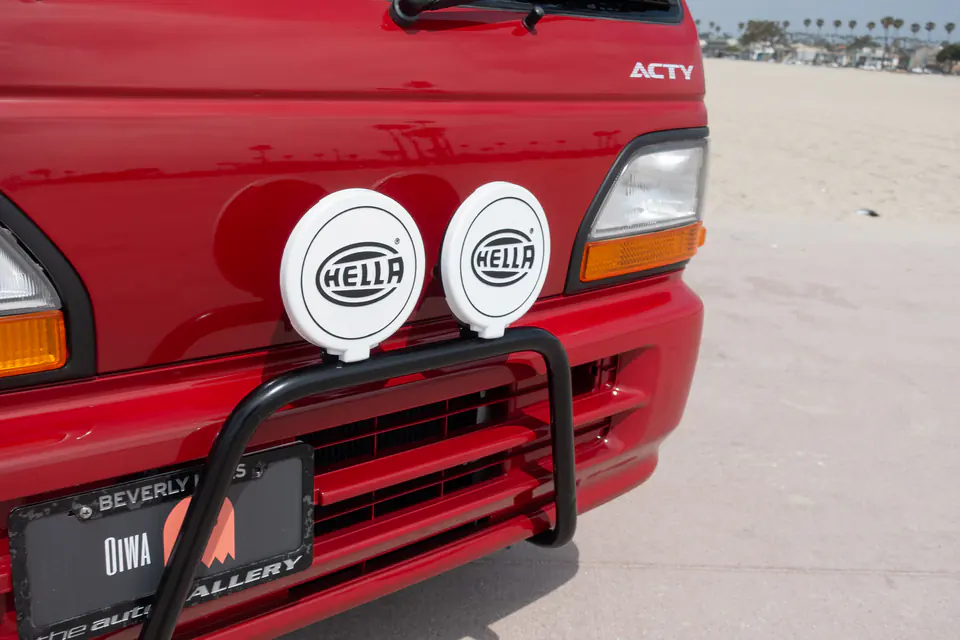
Light bars are generally off-road equipment: Arizona, for example, allows no more than two auxiliary driving lamps, mounted 16-42 inches high (A.R.S. 28-938), and no more than four bright front lamps lit at once on a highway (A.R.S. 28-946). A roof bar sits far above that range. Wire it through its own relay and switch and keep it off on public roads. LED light bars earn their place on work sites, in fields and on trails.
Color rules are stricter. In Arizona, lights visible from the front must be white or amber, and red or blue lights are reserved for emergency vehicles (A.R.S. 28-947); most states have similar rules. Set any color-changing halo accents to white, or switch them off, before you drive on the road.
For headlights, aim matters as much as brightness. LED bulbs that fit the stock housings are a common swap, but their road legality depends on the beam they produce and on how your state inspects, so ask your inspection station before you swap and re-aim the lights afterward. Kei Truck headlights include complete assemblies as well as bulbs.
Every light you add draws current from an alternator sized for a 1990s work truck, so add up the load before you wire in more.
Which bumpers, racks and fender flares make sense on a Kei Truck?
Every pound you bolt on comes out of the 350 kg (about 770 lb) rated load, so pick bumpers and racks for a job rather than for looks.
- Bumpers. A steel bumper protects the corners and gives you mounting points for lights and recovery gear, but it adds weight at the very ends of a short truck. Keep the lights and license plate visible. US plates and Japanese plate brackets don't line up, so use plate adapters. Browse Kei Truck bumpers by model.
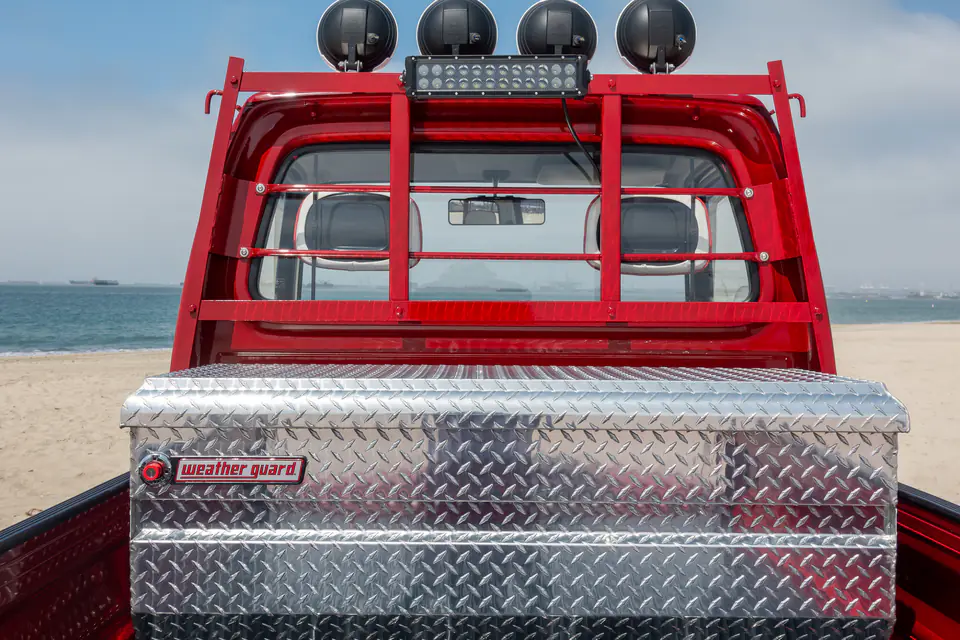
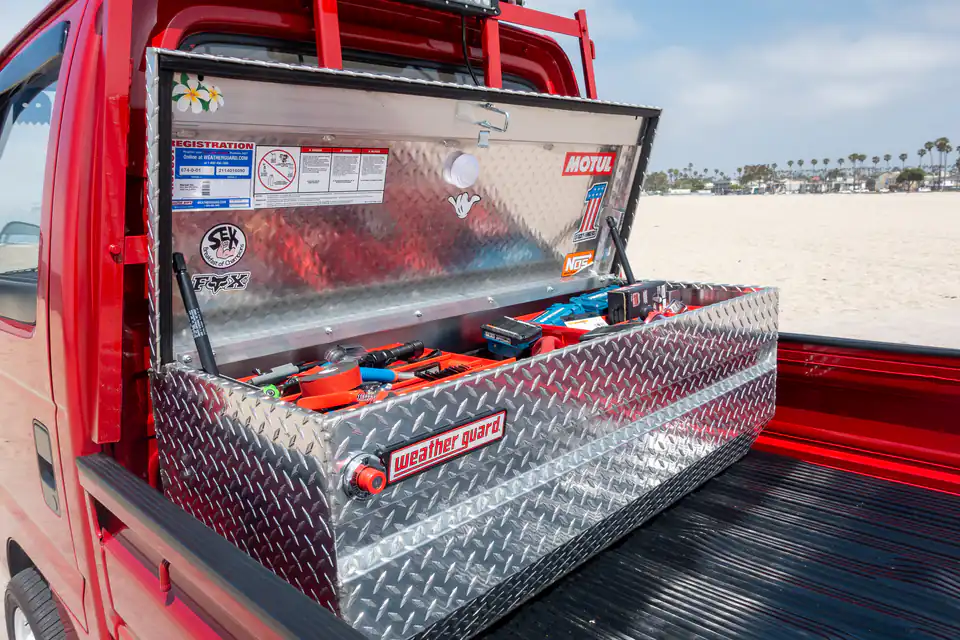
- Racks. A headache rack shields the rear window from shifting loads, and a bed rack carries ladders, lumber and pipe. Count the rack and the cargo together against the rating.
- Fender flares. Stock width is about 55 inches on pre-1999 trucks and about 58 inches from 1999 on (Honda listed 1,395 mm for its 1994 Acty; Suzuki listed 1,475 mm for its 1999 Carry). Fender flares add width, which matters in a state with a width cap like North Carolina's 60 inches.
How do you make a Kei Truck cab more comfortable?
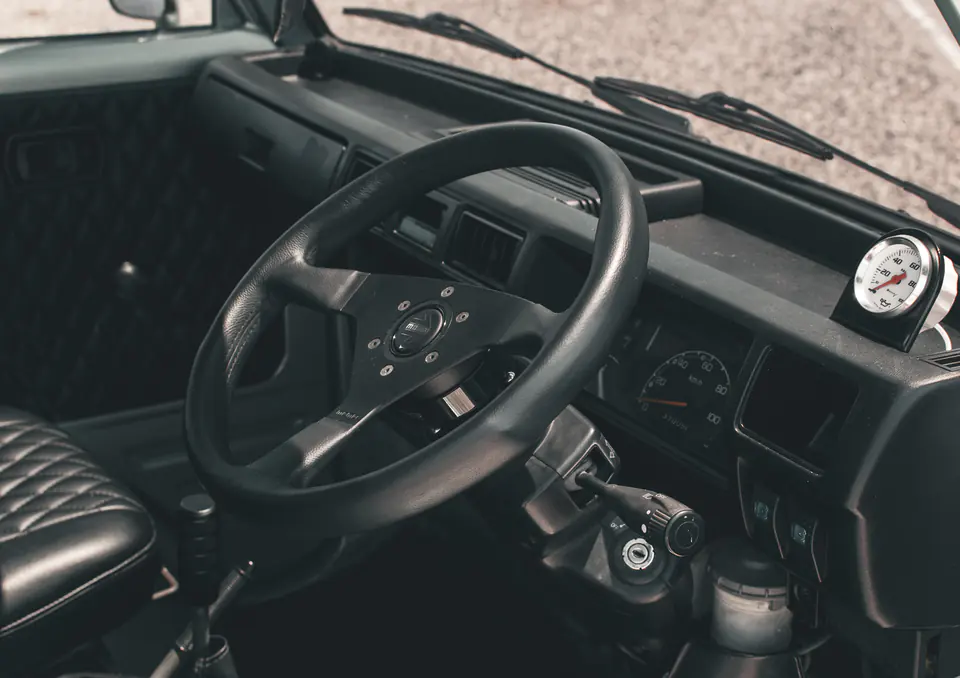
Seat covers, a better steering wheel, a shifter extender and working air conditioning do more for daily comfort than any exterior mod.
- Seats. Seat covers protect the original vinyl and add some padding.
- Steering wheels. An aftermarket wheel needs a hub adapter made for your chassis. Some late-1990s and 2000s trucks have a driver's airbag in the wheel: Suzuki offered one on the 1999 Carry, and Honda fitted one as standard on 2007 Actys. Removing the wheel removes that protection, so disconnect the battery and follow the manual's airbag procedure. See steering wheels and hub adapters.
- Shifter extenders. A shifter extender brings the lever closer if the reach feels long.
- Air conditioning. Japanese makers moved from R-12 to R-134a refrigerant in the early-to-mid 1990s, so check the label under the hood or the service ports before buying parts. Anyone who services vehicle A/C for pay must be certified under Section 609 of the Clean Air Act, according to the Environmental Protection Agency (EPA), and an R-12 conversion needs the dedicated fittings and new label the EPA requires (EPA retrofit guidance). A/C parts cover compressors, hoses and other components.
- Heat and noise. On trucks with the engine under the seats, insulation under the seat area cuts cab heat.
Which Kei Truck mods should you avoid?
Skip anything that fights the 350 kg rating, the small charging system or your state's equipment rules.
- Lifts far past 3 inches. The truck gets tippy, and steering and driveline angles suffer.
- Engine swaps. The brakes, cooling and chassis were designed around roughly 40-50 PS (the metric horsepower figure Japanese makers publish). Federal import paperwork treats a vehicle at least 21 years old as exempt only in its original configuration, with a replacement engine allowed only if it is the same model (EPA Form 3520-1, import code E), and states that test emissions may question a swap.
- Removing emissions parts. A missing catalytic converter fails emissions tests wherever they apply.
- Overloading the electrical system. Winches, light bars and inverters can demand more than a stock charging system supplies. Have it tested and refresh the alternator and belts first.
- Loud exhausts. Many states and cities limit exhaust noise, and a quiet truck draws less attention at inspection.
- Red, blue or flashing lights. In most states these belong to emergency and other authorized vehicles only.
For build ideas from other owners, browse the projects on r/KeiTruckBuilds. If your truck works rough ground, the Kei Truck off-road guide covers 4WD, tires and recovery, and the camper guide covers building within the rated load.
Frequently asked questions
Which Kei Truck upgrade should you do first?
Maintenance, then tires. A fresh timing belt and fluids protect the engine, and new light-truck tires in the right load range change how the truck grips and rides more than any bolt-on part. After that, add a modest lift only if you need the clearance, and register the truck in stock form before bigger changes.
How much does a Kei Truck lift kit raise the truck?
Most bolt-on kits sold for Kei Trucks add about 1.5-2 inches, using body spacers, suspension spacers or longer rear shackles depending on the model. That is enough for slightly taller tires. Going much past 3 inches raises the center of gravity on an already narrow, tall truck and strains steering and driveline angles.
Do you need an alignment after lifting a Kei Truck?
Yes. Changing ride height changes the front toe setting, which wears tires quickly and can make the truck wander. Get an alignment after the lift settles, re-aim the headlights, and check that brake hoses and wiring still have slack with the suspension fully extended. On 4WD trucks, keep an eye on the front CV boots.
Are LED light bars legal on a Kei Truck?
Usually only for off-road use. State lighting laws limit how many auxiliary lamps you may run and how high they sit; Arizona, for example, allows no more than two auxiliary driving lamps mounted 16-42 inches high. A roof bar falls outside rules like that, so give it its own switch and keep it off on public roads.
Can you put bigger tires on a Kei Truck?
Yes, within limits. Owners commonly move from the factory 12-inch wheels to 13- or 14-inch wheels for a wider choice of tires. Keep a light-truck load rating, confirm the bolt pattern and center bore for your chassis, check clearance at full steering lock, and remember that taller tires make the speedometer read slow.
Will modifications affect Kei Truck registration?
They can. States that inspect check lights, mirrors, tires and other equipment, and some states define Kei Trucks by size, so wide flares or tall racks can matter on paper. If your state plates Kei Trucks only under an antique, collector or farm class, read that class's rules before modifying, since some expect a near-stock vehicle.
Is an engine swap worth it in a Kei Truck?
Rarely. The brakes, cooling and chassis were designed around roughly 40-50 PS. Federal import paperwork treats a 21-year-old vehicle as exempt only in its original configuration, with a replacement engine allowed only if it is the same model, and states that test emissions may question a swap. Spend the money on maintenance, tires and gearing instead.
Sources
- Idaho Code 49-966, Bumper height limits
- Arizona Revised Statutes 28-938, Spot and auxiliary lamps
- Arizona Revised Statutes 28-946, Number of lamps lighted at once
- Arizona Revised Statutes 28-947, Lamp colors and flashing lights
- North Carolina G.S. 20-4.01, Definitions including mini-truck
- EPA: Motor Vehicle Air Conditioner (MVAC) system servicing
- EPA: Choosing and using a retrofit refrigerant for a CFC-12 vehicle A/C system
- EPA Form 3520-1, Importation of motor vehicles and engines (code E)