On this page
Key facts
- What it is
- The enclosed van version of a Kei Truck, with the same 660 cc and size limits
- Main families
- Suzuki Every; Daihatsu Hijet Van, Atrai and Hijet Cargo; Honda Acty Van, Street and Vamos; Subaru Sambar Van and Dias; Mitsubishi Minicab Van, Bravo and Town Box
- Importable now
- Built October 2001 or earlier, as of October 2026
- US duty
- 25% as a goods vehicle (HTS 8704); passenger vans (HTS 8703) have a 2.5% base rate, likely 12.5% in total since July 2026
- Rated load
- 350 kg (about 770 lb) with two people aboard
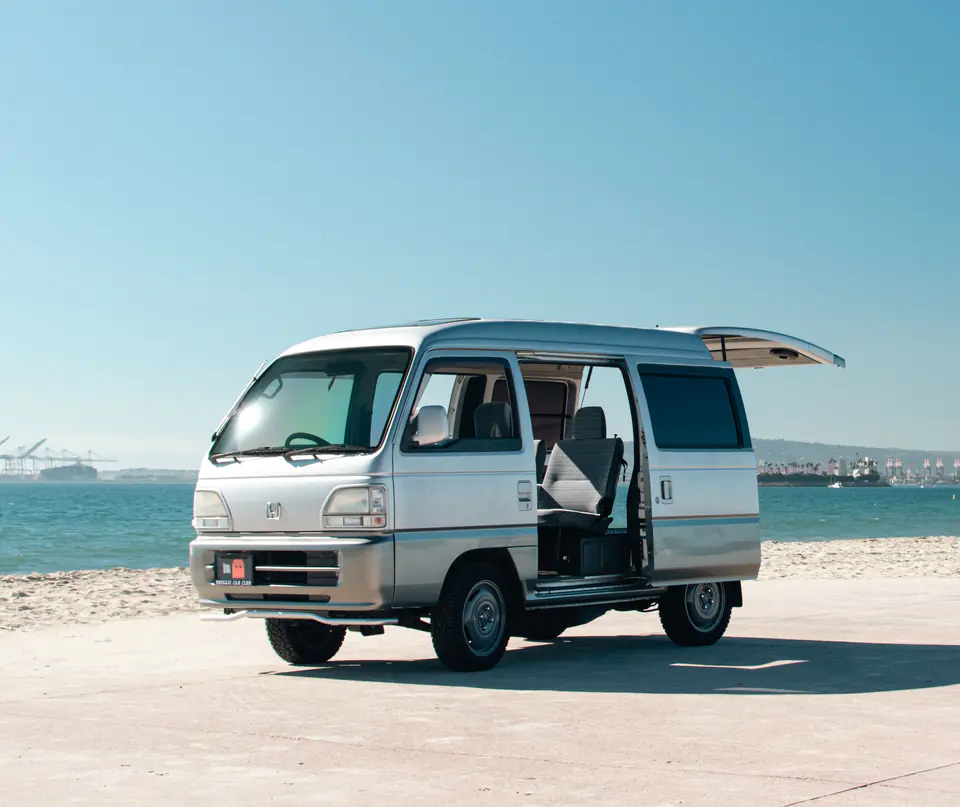
A Kei Van takes the chassis, engine and 660 cc rules of a Kei Truck and puts a steel box over them. You get a lockable, weatherproof load space, sliding side doors and, on passenger versions, a rear seat and side glass. In exchange you carry more weight, inspect more seams for rust and face a customs question that trucks don't raise.
What is a Kei Van?
A Kei Van is a one-box vehicle built to the same Kei limits as the trucks: since October 1998, no longer than 3.40 m, no wider than 1.48 m and no taller than 2.00 m, with a 660 cc engine. Before that change the length and width limits were 3.30 m and 1.40 m, so 1990s vans measure about 3,295 x 1,395 mm and 1999-on vans about 3,395 x 1,475 mm. Each maker built its van on the same platform and engine as its truck.
Japan registers Kei Vans two ways. Cargo versions are light commercial vans, often with a fold-flat rear seat and a long, flat load floor. Passenger versions, usually called wagons, carry rear seats, side windows and nicer trim. That split matters again at US customs.

Which Kei Vans can you import?
As of October 2026, a van built in October 2001 or earlier is old enough under the 25-year rule. That covers every 1990s van and the early builds of the generations launched in 1999.
| Maker | Cargo van | Passenger version | Chassis codes to search | Worth knowing |
|---|---|---|---|---|
| Suzuki | Every | Every Wagon (from June 1999) | DE51V/DF51V (1991-1999), DA52V/DB52V (1999-2001), wagon DA52W | F6A engine shared with the Carry; turbo versions were offered; Mazda sold it as the Scrum van |
| Daihatsu | Hijet Van, renamed Hijet Cargo in January 1999 | Atrai, then Atrai Wagon (from 1999) | Hijet S100V/S110V, then S200V/S210V; Atrai S120V/S130V, then S220V/S230V and S220G/S230G | EF engine; turbo Atrais are common |
| Honda | Acty Van | Street (until the 1999 redesign), Vamos (from 1999) | HH3/HH4 (1990-1999), HH5/HH6 (from May 1999), Vamos HM1/HM2 | Midship engine under the floor, like the truck |
| Subaru | Sambar Van and Dias Van | Dias Wagon (from February 1999) | KV3/KV4 (1990-1999), TV1/TV2 (from February 1999), Dias Wagon TW1/TW2 | Rear-mounted four-cylinder; supercharged versions exist |
| Mitsubishi | Minicab Van | Bravo (to 1999), Town Box (from April 1999) | U41V/U42V (1991-1999), U61V/U62V (from 1999), Town Box U61W/U62W | Early Town Box RX turbos use the four-cylinder 4A30T engine |
Two cautions on that table:
- Search by chassis code, not name. US listings use Hijet Van, Hijet Cargo, Street and Vamos loosely, while the code on the chassis plate is exact.
- Check the build month on 1999-on vans. Those generations stayed in production well past 2001, so only early builds qualify now. Suzuki moved the Every to the DA62V with the chain-driven K6A engine in September 2001, and those vans are only now crossing the line, one production month at a time.
Kei Van or Kei Truck: which should you buy?
A Kei Van and a Kei Truck share the same 350 kg rated load, so the choice comes down to whether your cargo needs a roof and a lock. Here is how they differ:
| Kei Van | Kei Truck | |
|---|---|---|
| Load space | Enclosed, lockable, weatherproof | Open bed with three drop sides |
| Curb weight, Suzuki example | 860 kg for a 1999 Every 4WD automatic (catalog data) | 670-740 kg for 1999 Carry trucks (Suzuki) |
| Rated load | 350 kg with two aboard, less with rear passengers | 350 kg |
| Height | About 1,850-1,990 mm on the vans we checked | About 1,710-1,850 mm |
| Seats | Two to four | Two |
| At customs | Goods or passenger vehicle, depending on design | Goods vehicle |
| Best uses | Tools, deliveries, camping, passengers | Farm loads, gravel, firewood, tall items |
The extra weight matters because the engine is the same size. A naturally aspirated van feels slower than the matching truck, so turbo and supercharged versions earn their keep in a van. Height matters too: measure your garage door before buying a high-roof model. If a camper is the plan, the weight limits in our Kei Truck camper guide apply to van builds too, and the Kei Truck model comparison helps if you're leaning toward a bed after all.
How are Kei Vans classified at US customs?
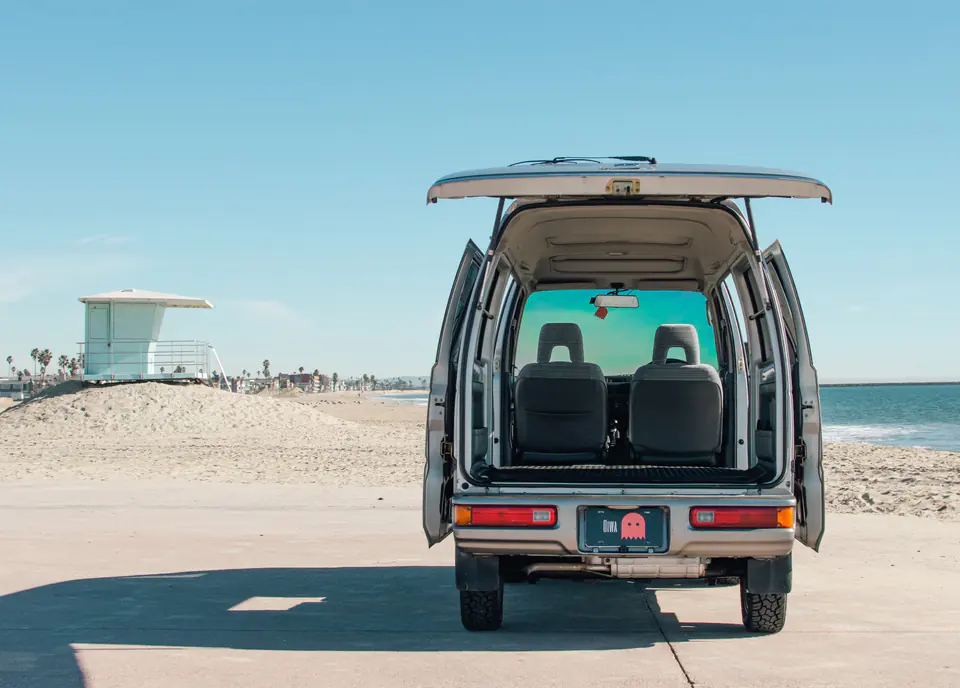
The Harmonized Tariff Schedule (HTS) sets a 25% general duty on motor vehicles for the transport of goods (heading 8704) and a 2.5% base rate on vehicles principally designed for the transport of persons (heading 8703), and a Kei Van can fall under either one. Customs and Border Protection (CBP) has now ruled both ways on Kei Vans:
- Passenger vehicle (8703). In ruling H302977 (January 2026), CBP classified a 1992 Subaru Sambar Van and a 1990 Suzuki Every under heading 8703. Both had second-row seats with permanent anchor points, side windows and rear comfort features, with no barrier between the seats and the cargo area.
- Goods vehicle (8704). In ruling N364403 (August 2026), CBP put a 1999 Honda Acty Van (V-HH4) under heading 8704 at 25%. Its fold-down rear seat had no factory seat belts or belt anchor points.
Rear-seat restraints and anchor points carried real weight in both decisions, alongside windows and passenger comforts. Each ruling covers only the vehicle described, so ask a licensed customs broker for an opinion on your van while you are still shopping. Don't try to steer the answer by pulling seats or adding windows before shipping; the heading turns on what the vehicle was principally designed to carry, and a wrong declaration can bring penalties on top of the duty.
Extra tariff layers changed in 2025 and 2026. CBP's Section 232 FAQ, last updated in December 2025, exempts used vehicles built 25 or more calendar years before the year they enter the country, and any van that meets the 25-year import rule passes that test. A Section 301 action in force since July 2026 brings Japanese goods with a base rate under 12.5% up to 12.5% in total, so a passenger-classified Kei Van likely owes about 12.5% rather than 2.5%, while a goods-classified van stays at 25%. Our Kei Truck cost guide tracks the current numbers.
Are Kei Vans street legal?
Usually on the same terms as a Kei Truck, though some state definitions, such as North Carolina's at N.C. Gen. Stat. 20-4.01, describe a vehicle built mainly to carry property. North Carolina's mini-truck definition uses the phrase "designed, used, or maintained primarily for the transportation of property" in a definition that also caps the engine at 660 cc and the length at 130 inches. A cargo van can fit that phrase, while a passenger wagon may not. The 130-inch figure also leaves out 1999-on vans at about 133.7 inches. Other states write a bed or hauling compartment into their definitions.
Read your state's wording before you buy, and check the Kei Truck laws by state for current rules.
What should you check on a Kei Van before you buy?
Rust is the deal-breaker on a 25-year-old van, and a van hides it in more places than a truck does. Work through this list:
- Body seams and floors. Check the floor pans, rocker seams, wheel arches, the bottoms of the sliding doors and rear hatch, and the rubber around every window.
- Sliding doors. Open and close each side door several times. A door that drags, drops or needs a slam has worn rollers or rails.
- High roofs and canvas tops. Look for water stains on the headliner and rust along roof seams and drip rails.
- Engine access. The engine sits under the front seats or floor, or at the back on the Sambar. Check for oil leaks, coolant seepage and heat-damaged wiring.
- Boosted engines. Every and Atrai turbos and Sambar superchargers deserve a look at the service records. Watch for blue smoke, oil leaks and weak boost.
- Sambar ECVT. Walk away from the 1990-1995 ECVT automatic. Subaru replaced it with a conventional 3-speed automatic in October 1995.
- Timing belt. The F6A, EF, E07A/E07Z, EN07 and 3G83 engines all use timing belts. Budget a belt and water pump unless there is a receipt.
- Rear springs. A van that sits low at the back probably spent years loaded.
- Air conditioning. Base work grades often listed it as an option, so confirm it is fitted and blows cold.
Where can you find Kei Van parts?
The F6A, EF, E07A/E07Z, EN07 and 3G83 engines in these vans are the same families used in the trucks, so filters, belts, plugs and many brake parts cross over. Body panels, glass, door hardware and interior trim are van-specific, and fitment often changes between generations, so order by chassis code.
Oiwa Garage groups van parts by brand:
- Honda Acty Van parts and Honda Vamos parts
- Subaru Sambar Van parts
- Daihatsu Hijet Van parts
- Mitsubishi Minicab Van parts
Every owners can use many F6A engine parts listed for the Carry, but confirm the chassis code first. For dimensions and weights of the matching trucks, see our Kei Truck specs page.
Frequently asked questions
Can you import a Kei Van into the US?
Yes, once it is at least 25 years old. As of October 2026, a Kei Van built in October 2001 or earlier qualifies under the federal 25-year exemption, counted from the month of manufacture. That covers 1990s Everys, Hijet Vans, Acty Vans, Sambar Vans and Minicab Vans, plus early builds of the generations launched in 1999.
Do Kei Vans pay 25% or 2.5% import duty?
It depends on how customs classifies the van. Goods vehicles under HTS heading 8704 pay 25%. Passenger vehicles under heading 8703 have a 2.5% base rate, but a Section 301 action in force since July 2026 likely brings a Japanese passenger van to about 12.5% in total. CBP has ruled both ways on Kei Vans, so ask your customs broker before you buy.
Are Kei Vans street legal?
Usually on the same terms as Kei Trucks in your state, but read the wording of the law. Some states define the class as a vehicle built mainly to carry property, or one with a bed or hauling compartment, and a passenger wagon may not fit. A few definitions also cap length at 130 inches, shorter than a 1999-on van.
Which Kei Van is best for a camper conversion?
Look for a long flat floor, a high roof and enough power for the extra weight. The Suzuki Every has wide parts support, the Subaru Sambar Dias offers a smooth rear-engine ride and supercharged versions, and the Daihatsu Atrai Wagon often comes turbocharged. Keep the build light, because the van's rated load still caps what it can carry.
How much can a Kei Van carry?
A Kei Van carries the same 350 kg (about 770 lb) rated load as a Kei Truck when two people ride up front, and the figure drops when passengers use the rear seat. Vans also weigh more than trucks, so a loaded van climbs more slowly and needs more distance to stop than an empty one.
Do Kei Vans come with 4WD?
Yes. Every maker offered 4WD vans, and the chassis code usually tells you which drive you have. The DF51V and DB52V Everys are 4WD, for example, as are the HH4 and HH6 Acty Vans. Not every 4WD van has a low range or extra-low gear, so confirm the exact equipment on the van you are considering.
Sources
- Harmonized Tariff Schedule of the United States, Revision 21 (2026), Chapter 87 (USITC)
- CBP ruling H302977 (January 28, 2026): Subaru Sambar Van and Suzuki Every classified under heading 8703
- CBP ruling N364403 (August 25, 2026): 1999 Honda Acty Van classified under heading 8704
- CBP: Section 232 Additional FAQs, Automobiles and Auto Parts
- Presidential Memorandum of July 23, 2026 on Section 301 actions, 60 economies (Federal Register 2026-15274)
- 49 U.S.C. 30112, including the 25-year exception in subsection (b)(9) (Cornell LII)
- N.C. Gen. Stat. 20-4.01, definitions including mini-truck