On this page
California at a glance
No road use- Status
- No road use
- Where you can drive
- Private land not open to the public
- Speed rule
- Not applicable
- Interstates
- Not applicable (no road use)
- Title / registration
- Refused for direct imports without FMVSS and emissions compliance evidence
- Inspection
- Not applicable
- Emissions
- US and California emissions compliance required; Kei imports cannot document it
- Key law
- DMV Vehicle Industry Registration Procedures Manual §§ 12.020 and 12.050
Are Kei Trucks street legal in California?
No: section 12.050 of the DMV's Vehicle Industry Registration Procedures Manual covers direct imports, meaning vehicles built for use in another country and brought in later, and it asks for proof that the truck was built to Federal Motor Vehicle Safety Standards (a certification label or a letter from the manufacturer) plus proof that Environmental Protection Agency (EPA) requirements are met. A 1990s Kei Truck from Japan has neither, and no maker is going to write that letter.
The same section closes the door most buyers hope is open. If an import cannot be converted to meet US safety standards and US or California emission standards, the manual says it gets no registration of any kind, on the road or off it. Other sites still describe an off-highway route for Kei Trucks in California; the DMV's own manual does not support it.
The federal 25-year rule does not change this. It decides whether a truck may enter the country, not whether a state will plate it.
Is there any exemption for older imports?
Only for vehicles built in 1975 or earlier: section 12.020 lets certain used direct imports of that age be registered if the owner certifies an exemption on Form REG 256F. That line is fixed, not rolling, so a Kei Truck from the 1990s will never reach it.
On paper, the manual points emissions questions to the California Air Resources Board (CARB), which accepts conversions certified through its authorized laboratories. That process is built for companies converting vehicles, not for one farm truck, so plan your purchase as if the route does not exist.
What happens if you apply anyway?
Section 12.020 makes a refusal costly. It tells field staff to take no fees, pick up any temporary permit, tell the applicant the vehicle must be removed from California, and issue a one-trip or moving permit for that purpose. Staff also send paperwork so a stop code goes on the vehicle record.
That is a strong reason to settle the question before a truck ships. Next door the picture is different: Arizona registers 25-year-old Kei Trucks like any other pickup, though only for people who actually live there.
What can a California Kei Truck owner do?
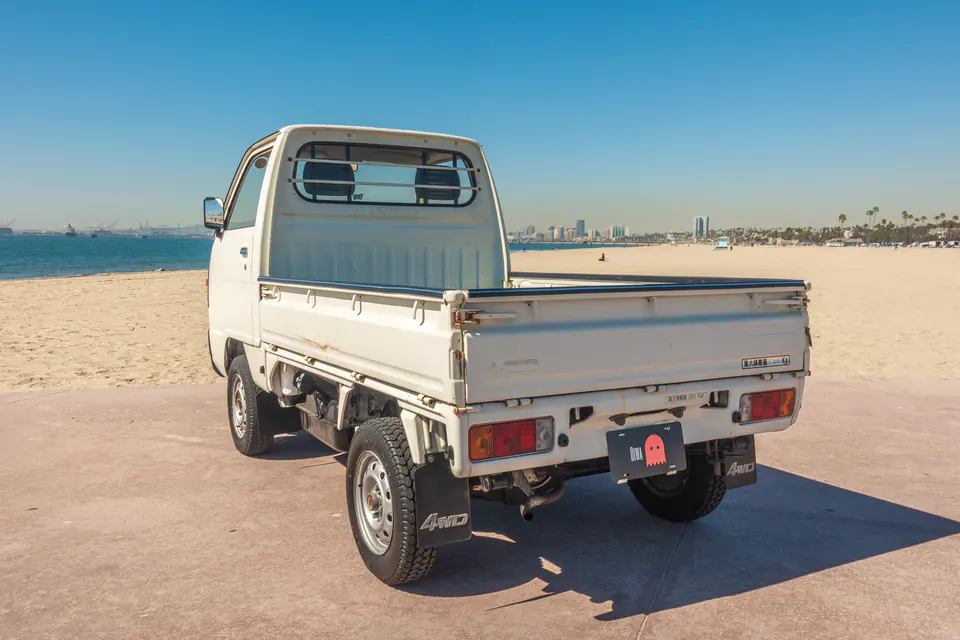
Use it where California's registration rules do not reach: private land that is not open to the public. On a farm, ranch, vineyard, orchard or industrial site, a Kei Truck needs no California plate, and that is how many California Kei Trucks are used today.
Decide the truck's job before you buy
In California a Kei Truck is a private-property vehicle. Buy one only if a farm, ranch, vineyard, orchard or other private site is where it will work.
Keep the full import file anyway
Hold on to the customs entry, the HS-7 safety declaration, EPA Form 3520-1 (the emissions declaration) and the export certificate. A future buyer or another state will want proof the import was lawful.
Do not apply expecting an exception
The DMV manual tells staff to refuse a non-qualifying direct import, collect no fees, advise that the vehicle be removed from the state and flag the vehicle record.
Register only where you genuinely live
If you move to a state that plates Kei Trucks, register it there after you establish residency. Using an address where you do not live can break residency and garaging rules and void your insurance, so talk to an attorney first.
Push for a change
Tell your state legislators why a Kei class matters to your farm or business, and point them to states that have written one.
Some owners register through an address or business in another state while the truck lives in California. That can violate residency and garaging rules, bring fines and leave you without valid insurance. Talk to an attorney before you go anywhere near it.
If a road-legal small utility vehicle is the goal, compare the options in our Kei Truck vs UTV guide. For property use, our off-road guide covers what these trucks handle well. A modest lift kit and an LED light bar are popular upgrades for trucks that will never see pavement.
Is California likely to change its rules?
Not soon, as of October 2026. No bill in the 2025-2026 session would create a road class for Kei Trucks, and the barrier here is emissions certification as well as safety. That makes California harder to move than states where a DMV policy or a single statute is the only obstacle.
Change elsewhere has come from owners organizing and talking to legislators. Owners share state updates in the r/KeiTruckBuilds community, and the Kei Truck laws hub tracks every state. If you are still weighing a purchase, our buying guide covers condition checks that matter for a long-term property truck, and good filters keep a dusty-site engine alive.
Frequently asked questions
Can a Kei Truck get off-highway registration in California?
Not according to the DMV's own manual. Section 12.050 says an import that cannot be brought up to US safety standards and US or California emission standards may not be registered at all, whether for public roads or for off-road use. Some websites claim an off-highway route exists, so read the manual section yourself before spending money on that idea.
Why doesn't the 25-year rule make a Kei Truck legal in California?
The 25-year rule is federal, and all it does is let an old vehicle enter the United States without meeting federal safety standards. California registration is a separate state decision, and the DMV requires proof that a direct import meets federal safety standards plus US and California emission standards. A 1990s Kei Truck cannot supply that proof, so the import exemption does not carry over.
What happens if I try to register a Kei Truck in California anyway?
Under section 12.020 of the DMV manual, staff collect no fees, take back any temporary operating permit, advise you that the vehicle must leave California and offer a one-trip or moving permit to get it out. They also send paperwork so a stop code can be placed on the vehicle record. Settle the question before the truck arrives.
Is out-of-state registration an option for a California Kei Truck?
Your registration state should be the one where you really live and keep the truck. Some owners use an out-of-state address or business, but that can violate residency and garaging rules, lead to fines and void insurance coverage. A genuine resident of another state follows that state's law. Talk to an attorney before relying on any out-of-state arrangement.
Is farm use legal for a Kei Truck in California?
Yes. Registration rules cover public roads, and a Kei Truck working on private land that is not open to the public needs no California plate. Farms, ranches, vineyards and large private sites are where these trucks are used in the state. Driving between parcels on a public road is where you would need a registration the DMV will not issue.
Sources
This page explains the rules in plain English. It is not legal advice. Laws change and offices apply them differently, so confirm with your state DMV or county titling office before you buy or register a truck.