On this page
Ohio at a glance
Local opt-in only- Status
- Local opt-in only (mini-truck class)
- Where you can drive
- Roads in opted-in localities with a limit of 35 mph or lower
- Speed rule
- Road limit: 35 mph or lower, and only with local permission; crossing faster roads at intersections is allowed
- Interstates
- Not allowed
- Title / registration
- Ownership title with form BMV 3722; plates only after a local police inspection
- Inspection
- Local law enforcement inspection before registration (OAC 4501-30-02)
- Emissions
- E-Check exempts vehicles more than 25 model years old (OAC 3745-26-12)
- Key law
- ORC 4501.01(BBB), 4511.214, 4511.215 and 4519.401
Is a Kei Truck street legal in Ohio?
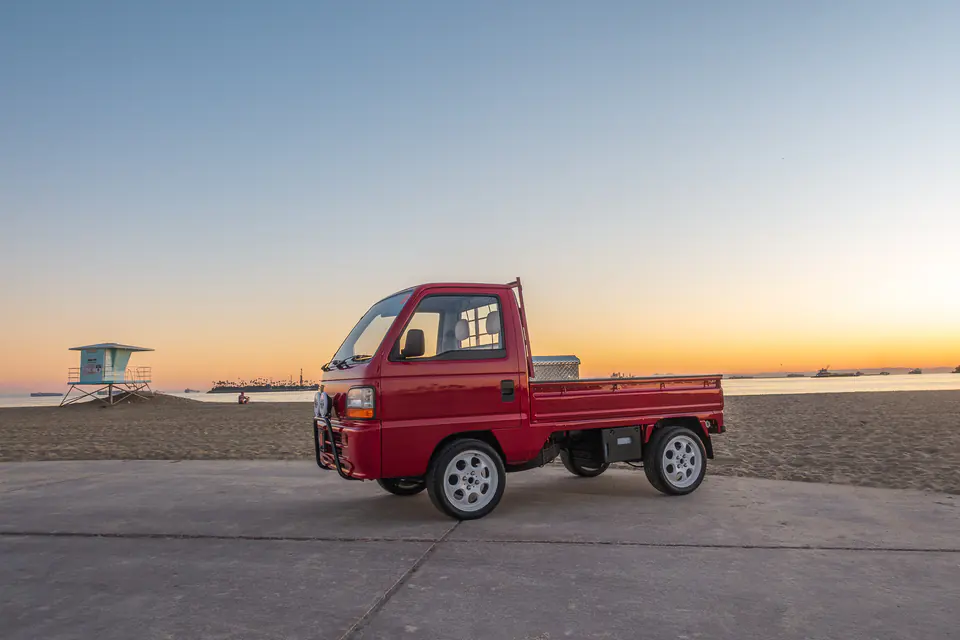
Only where local government says yes. Ohio wrote a vehicle class that reads like a description of an imported Kei Truck. Under ORC 4501.01(BBB), a mini-truck has four wheels, a 660cc or smaller engine (or an electric motor of 7,500 watts or less), a dry weight anywhere from 900 to 2,200 pounds, an enclosed cab, and a cargo bed at the rear that gives it the look of a pickup or van. The vehicle must also never have been built to US Federal Motor Vehicle Safety Standards (FMVSS), which every Japanese-market Kei Truck satisfies. Length and width are not limited at all, and there is no model-year test beyond the federal 25-year rule that decides what can be imported.
The problem is road use. ORC 4511.214 makes it an offense to drive a mini-truck on any Ohio street or highway unless two things are true: the speed limit is 35 mph or lower, and the local authority has granted permission under ORC 4511.215. There is no statewide default. A first violation is a minor misdemeanor, and repeat offenses within a year carry heavier charges.
How does local opt-in work in Ohio?
A local authority can approve mini-trucks by ordinance or resolution. When it does, ORC 4511.215 requires it to:
- Keep operation to roads with a speed limit of 35 mph or lower.
- Require each truck to pass an inspection carried out by local law enforcement.
- Admit only trucks that pass and are registered and titled.
- Notify the Ohio Director of Public Safety.
The local authority may add conditions of its own. Two neighboring towns can have different rules, and permission in one does not carry into the next. Inside an authorized area, ORC 4511.214 still lets you go straight through an intersection with a faster road.
To check an address, look up the local codified ordinances and search for 4511.215, the state section an authorization will cite. Next, phone the clerk and ask for the ordinance number and its conditions in writing. Do this before you buy a Kei Truck, not after.
Can Ohio farmers drive a Kei Truck between fields?
Yes, within tight limits. ORC 4519.401 allows a mini-truck to work on a farm for agricultural purposes when the farm owner qualifies for current agricultural use valuation (CAUV), Ohio's farmland tax program. The owner, or someone working for the owner, may use public roads only to get from one field to another. This rule stands apart from local opt-in, so it applies even where no ordinance exists. It does not cover runs to town or the feed store.
How do you get an Ohio title and plates for a Kei Truck?
Ohio separates ownership from road use. The titling affidavit, form BMV 3722, says a mini-truck title is for ownership only and that Ohio law does not require one. You do need the title to register, and you need a passed local inspection before the Bureau of Motor Vehicles (BMV) will issue plates for roads with a 35 mph or lower limit. The federal paperwork that comes first is explained in how to import a Kei Truck.
Confirm local permission first
Ask the clerk of the local government that controls your roads whether an ordinance or resolution under ORC 4511.215 allows mini-trucks, which roads it covers and what extra conditions apply. Get the ordinance number in writing.
Title it at the county title office
Take the notarized BMV 3722 affidavit marked MT for mini-truck, the Japanese export certificate with a certified translation, your bill of sale and the import papers (CBP Form 7501, EPA Form 3520-1 and the HS-7 declaration) to a county clerk of courts title office. Pay the title fee and any tax due.
Pass the local police inspection
Book the inspection with the law enforcement agency named in the ordinance. The state checklist covers brakes, brake lights, headlights, tail lights, turn signals, steering, windshield, rearview mirror and tires. The BMV points owners to form DPS 1373.
Register it at a deputy registrar
Bring the title, the passed inspection and proof of insurance to a BMV deputy registrar. The plates cover only the authorized roads with a speed limit of 35 mph or lower.
Carry the local paperwork
Local ordinances can add conditions such as permits, extra equipment or excluded streets. Keep a copy of the ordinance and your inspection record in the truck.
What does the Ohio mini-truck inspection check?
Ohio Administrative Code 4501-30-02 sets the equipment local officers check: brakes, brake lights, headlights, tail lights, turn signals, steering, windshield, rearview mirror, and tires without bulges or breaks. A local ordinance can add items. On a truck that sat unused before export, brake parts and cracked or loose mirrors are frequent weak spots. Our maintenance guide covers the rest of a first service.
Emissions are unlikely to matter. E-Check, Ohio's emissions program in its northeast counties, permanently exempts vehicles more than 25 model years old under OAC 3745-26-12.
Across the state line, Pennsylvania has no local opt-in at all, and an antique plate is its only road route. See every state side by side on the Kei Truck laws hub.
Frequently asked questions
Can I drive a Kei Truck in Ohio without a local ordinance?
No, apart from qualifying farm travel. ORC 4511.214 makes it an offense to drive a mini-truck on a public road unless the local authority has authorized it under ORC 4511.215, and even then only where the speed limit is 35 mph or lower. A first offense is a minor misdemeanor, with steeper penalties for repeats.
Do I need an Ohio title for a Kei Truck?
Not by law, but you need one to register it. Form BMV 3722 says a mini-truck title is for ownership purposes only and is required before registration for roads with a 35 mph or lower limit. You file the notarized affidavit at a county clerk of courts title office.
Is farm use of a Kei Truck allowed in Ohio?
Yes. ORC 4519.401 allows a mini-truck to be used on a farm for agricultural purposes when the owner qualifies for current agricultural use valuation (CAUV). The owner, or someone working for the owner, may also use public roads, but only to get from one farm field to another.
Does Ohio's mini-truck definition fit every Kei Truck?
Nearly all of them. ORC 4501.01(BBB) sets no length or width limit, allows engines up to 660cc, and accepts a dry weight anywhere from 900 to 2,200 pounds. The definition even demands that the vehicle was never built to US safety standards, which describes a Japanese-market truck exactly.
Does a Kei Truck need an E-Check in Ohio?
In practice, no. E-Check covers only northeast Ohio counties, and OAC 3745-26-12 permanently exempts vehicles more than 25 model years old. Odd model years test in odd calendar years, so a 2001 truck would first be due in 2027, when it is past that age. Confirm with the BMV at registration.
Can I cross a busy road with a Kei Truck in Ohio?
Yes, at an intersection. ORC 4511.214 does not stop a mini-truck from proceeding across an intersection with a road whose limit is above 35 mph. You still need local permission for the roads on either side, and you cannot drive along the faster road itself.
Sources
- Ohio Rev. Code 4511.214, mini-truck operation on streets and highways
- Ohio Rev. Code 4511.215, local authorization of mini-trucks
- Ohio Rev. Code 4501.01, definitions (mini-truck at BBB)
- Ohio Rev. Code 4519.401, farm and dealer use of mini-trucks
- Ohio BMV form 3722, titling affidavit (rev. 8/26)
- Ohio Admin. Code 4501-30-02, required equipment for mini-truck inspection
- Ohio Admin. Code 3745-26-12, E-Check owner requirements and exemptions
This page explains the rules in plain English. It is not legal advice. Laws change and offices apply them differently, so confirm with your state DMV or county titling office before you buy or register a truck.